Rubber manufacturers planning equipment for 2026 need to look beyond machine size. Product geometry, mold structure, rubber material, production volume, process control, and factory workflow can all affect whether a standard machine is sufficient or whether customization has a clear technical purpose.
The decision should start with the product and process. Buyers comparing a custom injection molding machine with a standard platform need to separate normal production requirements from needs that call for changes in clamping, control, mold handling, or machine layout.
Where Standard Equipment Still Makes Sense
Standard machines remain practical when product dimensions, mold size, injection requirements, and production methods fit an established configuration. Technical discussions can then focus on capacity, tooling compatibility, and process settings.
This route still requires review. Buyers should check rubber material, injection volume, mold dimensions, clamping needs, curing conditions, and venting. Standard equipment is suitable only when these factors can be handled within the existing machine architecture.
For factories producing stable product families, standardization may also simplify training and maintenance. Similar controls and layouts can reduce unnecessary variation across a production area. Extra options have little value when they do not solve a specific process problem.
When Customization Has a Clear Production Role
Customization becomes useful when a product creates requirements that standard architecture cannot address efficiently. Large parts, unusual mold movement, special venting sequences, different pressure stages, or integration with auxiliary devices may justify a modified configuration.
For this reason, a custom injection molding machine should be specified from production data rather than from a long option list. Product drawings, part weight, mold structure, rubber compound, output goals, and factory conditions provide a practical basis for deciding what needs to change.
The same logic helps buyers evaluate a supplier of customized rubber injection molding machines. Suppliers should explain why each modification is needed and how it relates to the intended molding process. This makes quotations easier for teams to compare.
Dekuma provides customized rubber injection molding equipment and turnkey support for industrial applications. Its customized solutions are particularly relevant when a defined production challenge requires changes to the machine configuration, mold handling, or process controls.
Why Clamping Functions Matter in Machine Selection
Clamping is not only a question of force. The system also needs to support controlled mold closing, venting, and protection through different stages of a molding cycle. These requirements matter when the process cannot rely on one fixed pressure and speed setting.
Finite element stress analysis is used during the design of key clamping components to evaluate their structural rigidity. The clamping system provides three separate zones with adjustable pressure and speed. Low-pressure and high-pressure protection settings can also be adjusted.
Multiple venting cycle settings and precise clamping stroke control add further flexibility. These functions can help release trapped air or control mold movement. Their value depends on the actual tooling.
The custom injection machine mold company therefore needs to consider clamping functions as part of the complete process. More settings do not automatically create a better machine. Each setting should have a clear relationship with the mold, material, and production sequence.
Control Systems Should Match the Intended Process
Machine capacity alone does not show whether equipment fits a project. Electric and hydraulic controls affect parameter setting, movement response, and repeatability. When customized functions are added, the control system must support the required sequence without making operation unnecessarily complicated.
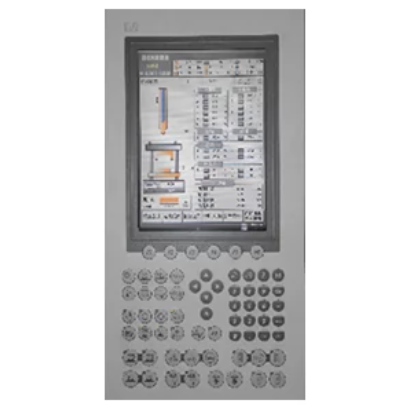
The machine uses a specialized industrial computer with dedicated software for control. Electrical components are sourced from internationally established brands. The hydraulic system uses German-made proportional flow valves, pressure control valves, and directional valves to support controlled machine movement.
For a custom injection molding machine, these elements matter when pressure, speed, or movement sequences differ from standard production. Buyers should therefore review mechanical and control requirements together.
Dekuma presents the clamping, electric, and hydraulic systems as parts of a broader machine solution. For B2B buyers, the practical question is whether these functions support the planned mold, operator workflow, production sequence, and maintenance needs without adding unnecessary complexity.
Practical Framework for 2026 Equipment Decisions
Machine selection can begin with five areas: product geometry, rubber material, mold structure, output requirement, and factory workflow. These points help teams identify essential functions before discussing optional equipment.
When comparing standard and customized equipment, buyers can ask what production problem each added function solves. This is also a useful way to evaluate a custom injection machine mold company. Clear technical reasoning is more useful than a long option list.
Future needs should also be considered. Too little flexibility may restrict later product changes, while excessive customization can increase cost, training needs, and maintenance complexity. Equipment planning should balance current requirements with likely changes in molds, products, or workflow.
Selecting the Right Level of Customization
The 2026 direction is not simply a shift from standard machines to customized ones. Standard equipment still suits stable production tasks, while customization is more appropriate when product, mold, control, or workflow requirements fall outside normal machine configurations.
Buyers can make a clearer decision by defining the molding process before choosing the machine. When each customized function has a specific purpose, the final configuration is easier to compare, validate, operate, and manage throughout the production project.